Next Project
Waterloo Renewal Completed
The Cowper Street Housing project was initiated by Homes NSW (LAHC) and The King’s Trust Australia (Prince’s Trust Australia) to demonstrate how sustainable density could be integrated with established neighbourhoods.
Originally planned as a mix of social, affordable and market housing, the mix was changed to entirely social post DA approval. The project has tripled the site’s previous social housing stock, and an enhanced public domain that supports the diversity of individual needs as well as promoting neighbourhood networks and opportunities for community spirit.
Inspired by the site’s heritage context, the project increased the number of dwellings on the site by almost 300% without compromising amenity. The innovative combination brick and CLT construction has delivered much needed social housing that exceeds conventional market housing performance and design benchmarks.
Matthew Gallagher
Homes NSW
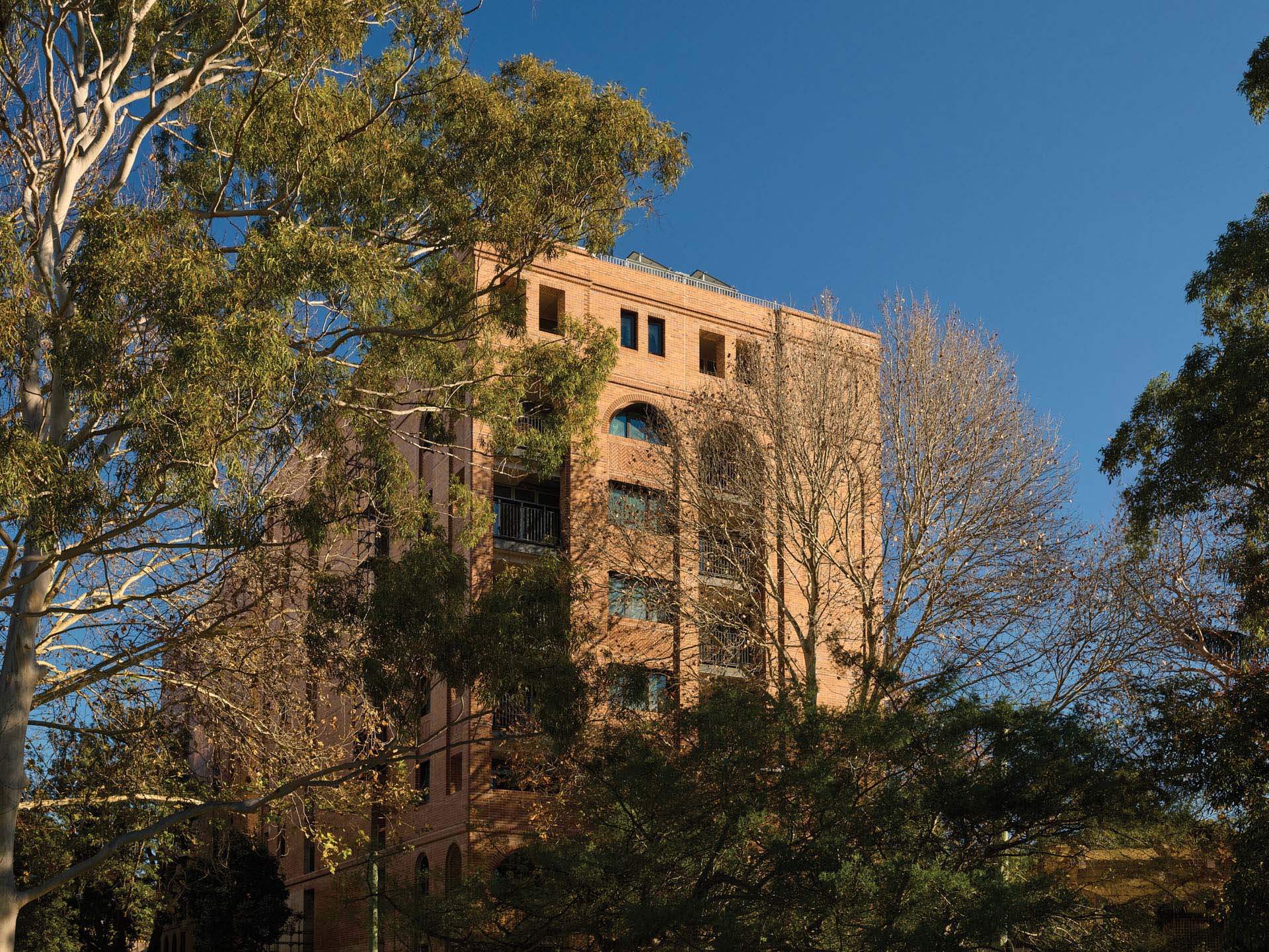
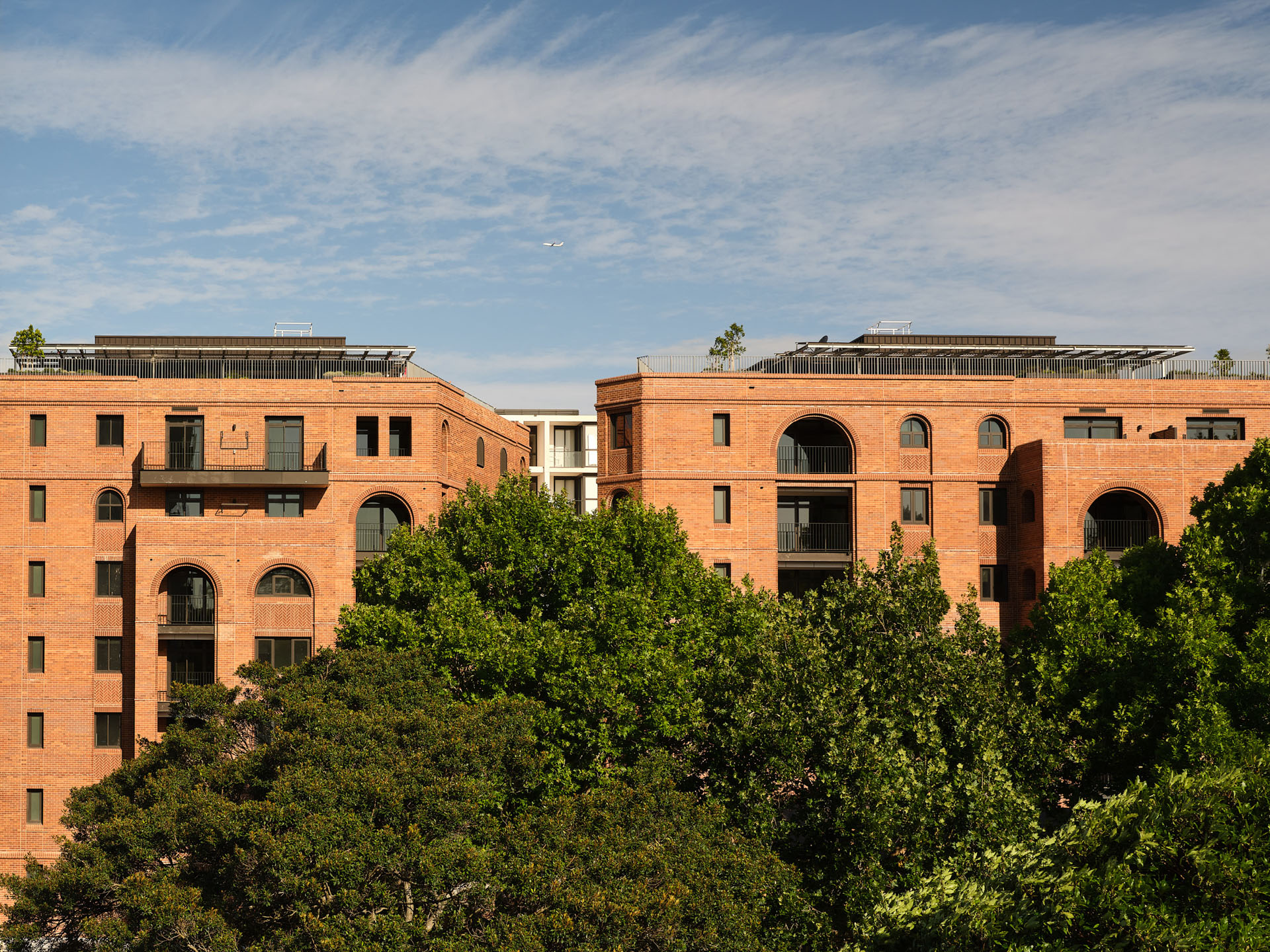
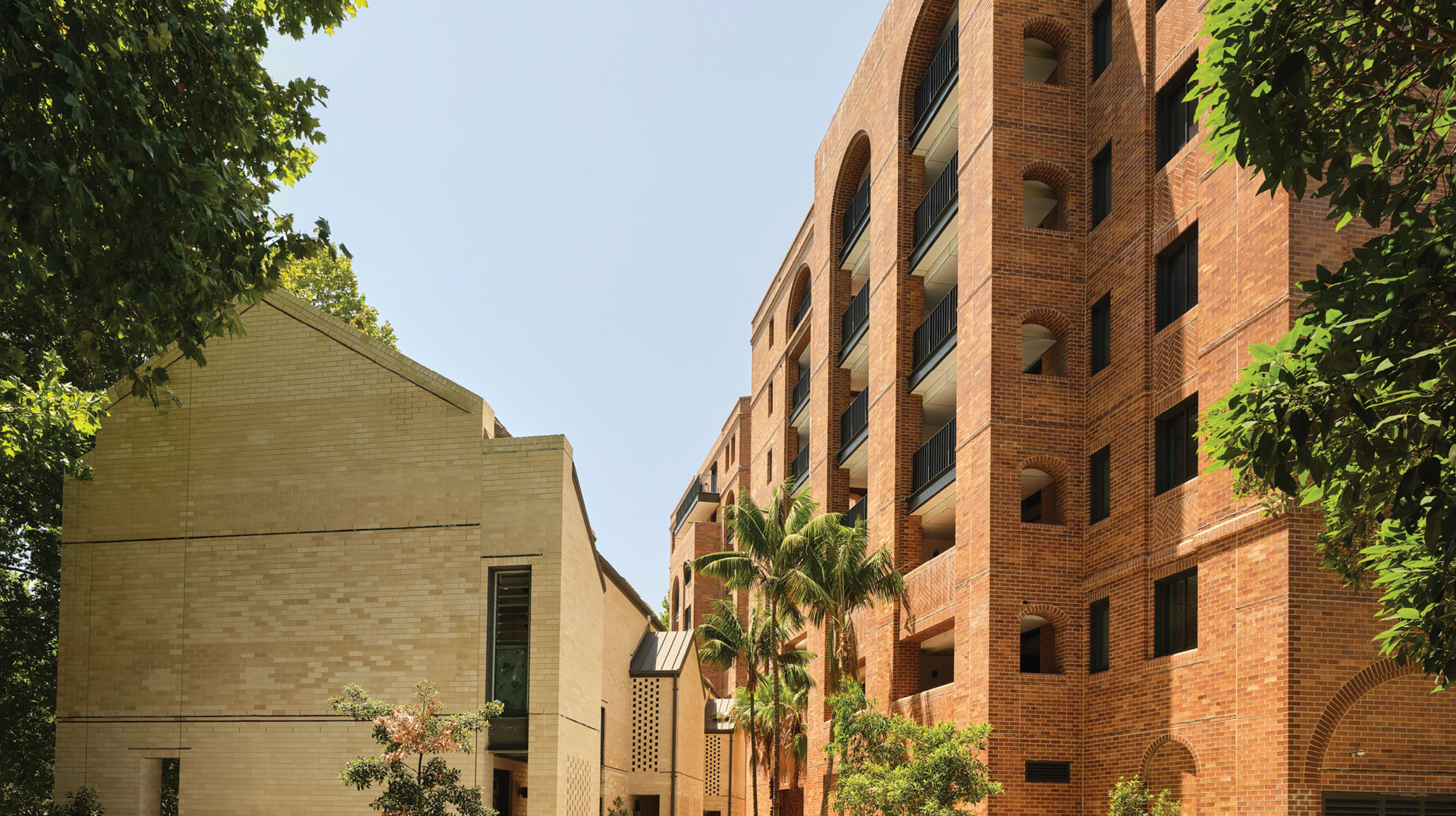
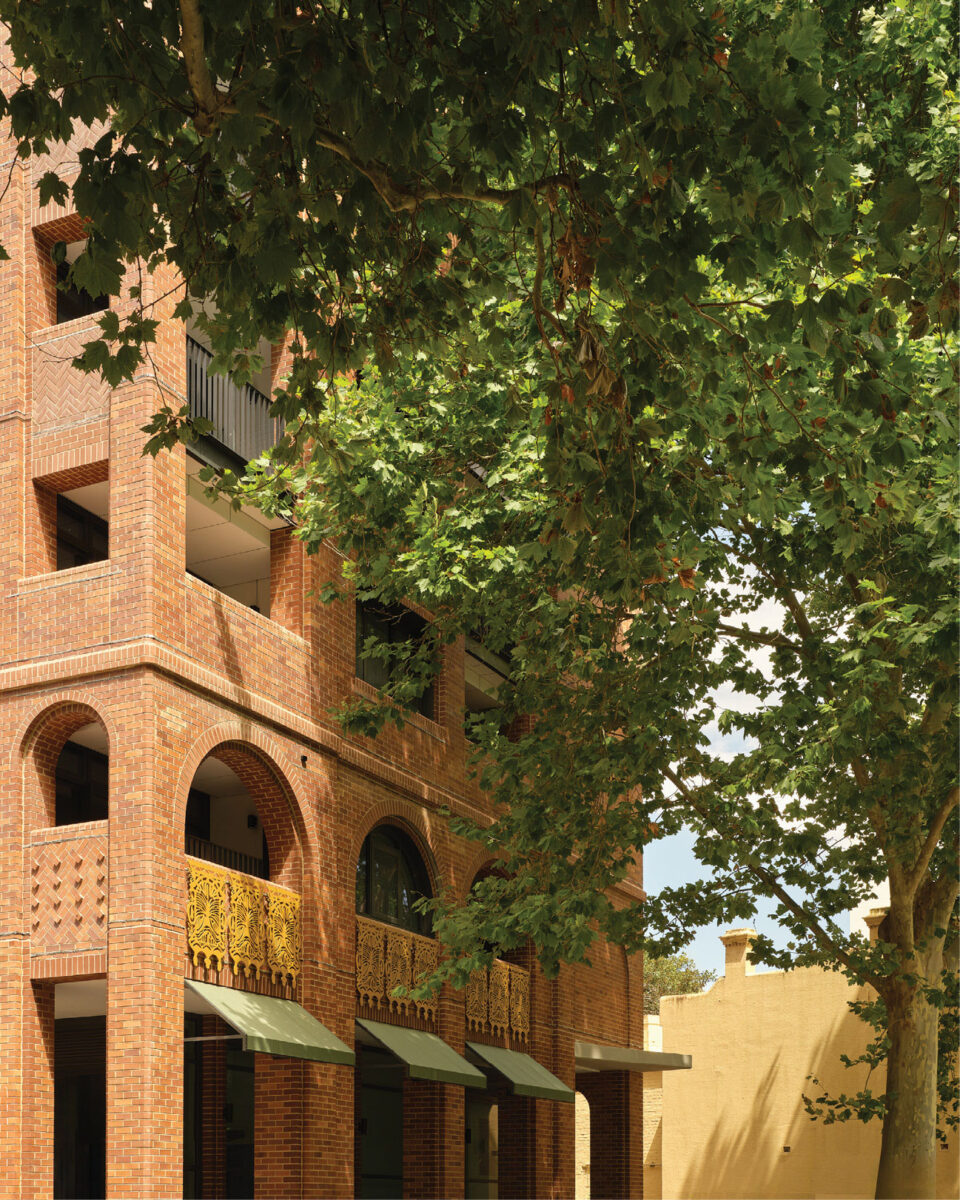
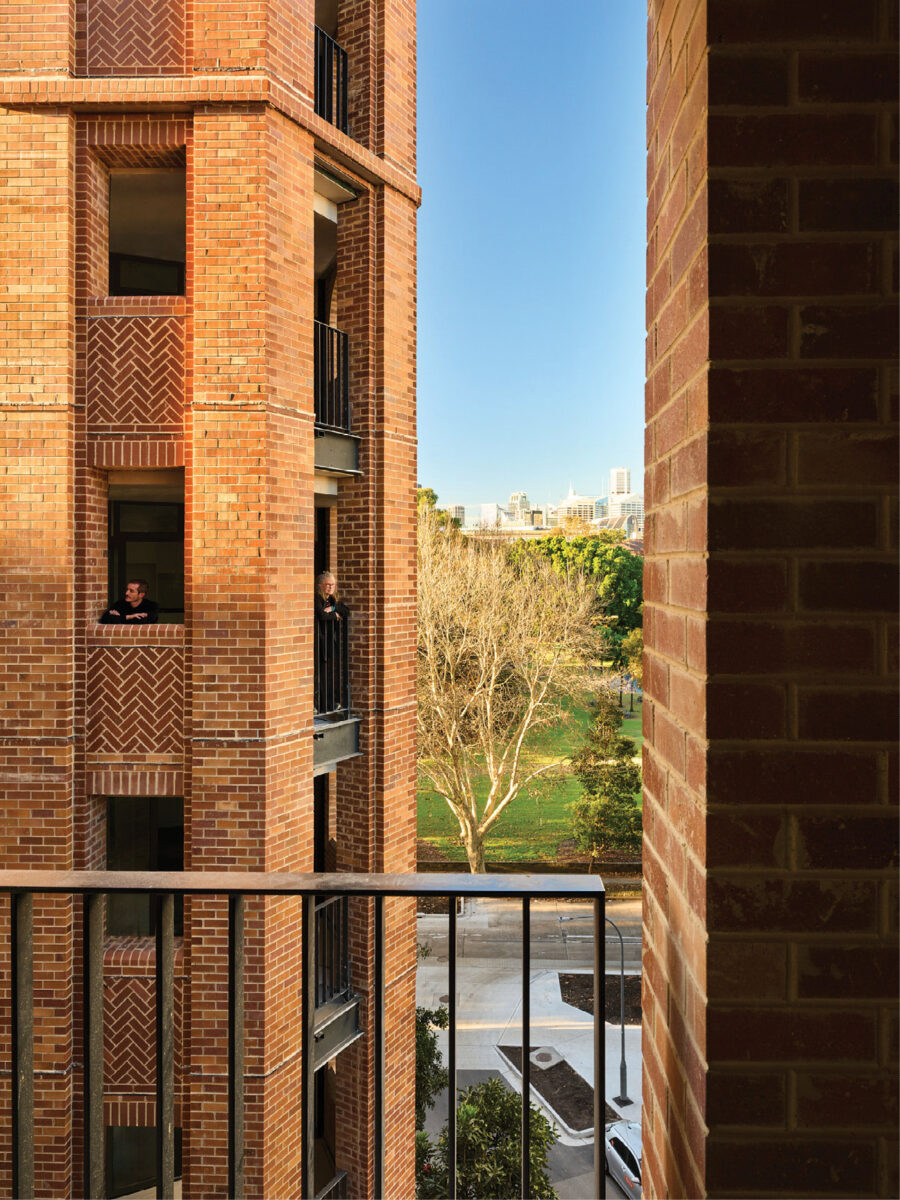
On the edge of a heritage conservation area, the built form responds to historic typologies that characterise Glebe and Pyrmont – Victorian terraces and large masonry wool stores which combined external brickwork with internal load-bearing timber structure.
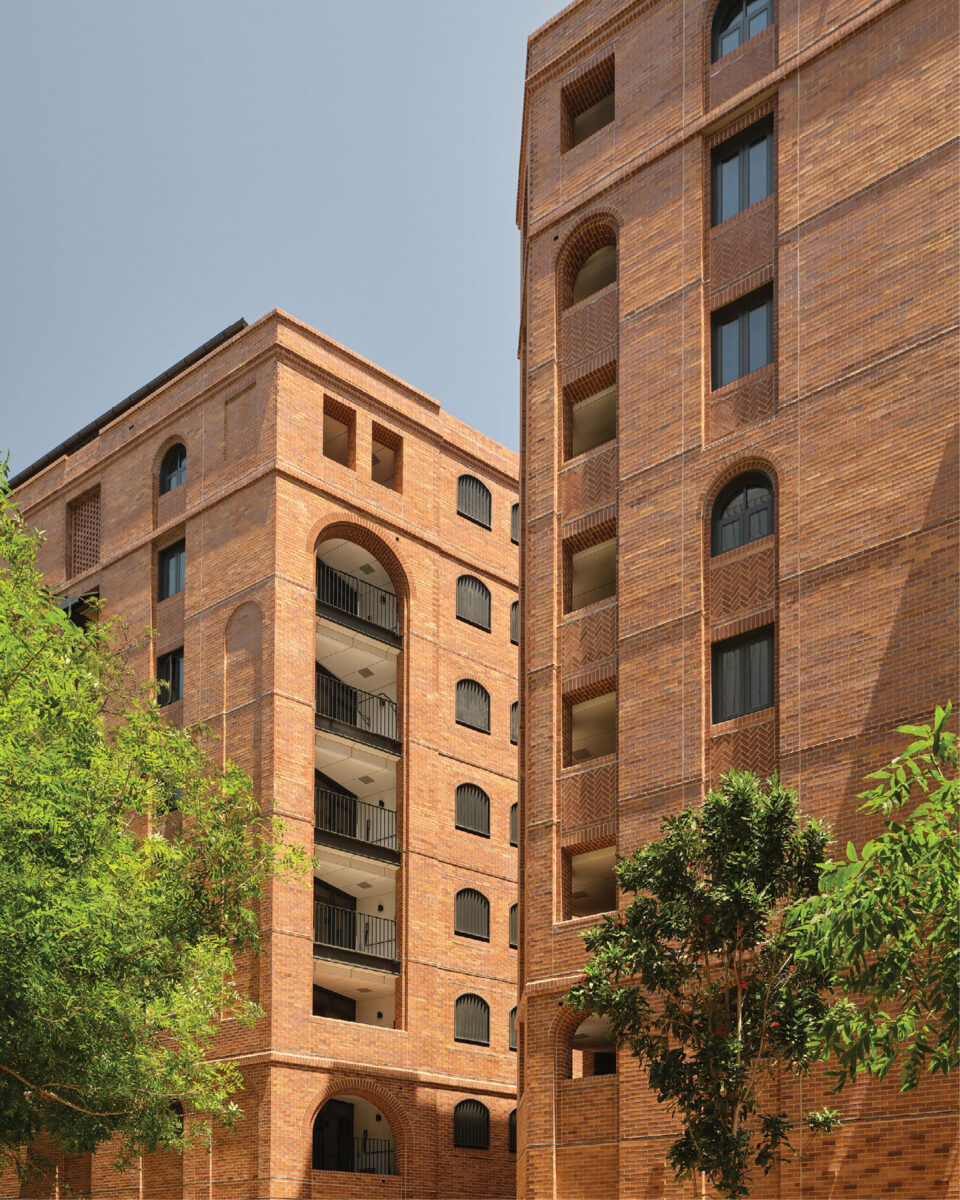
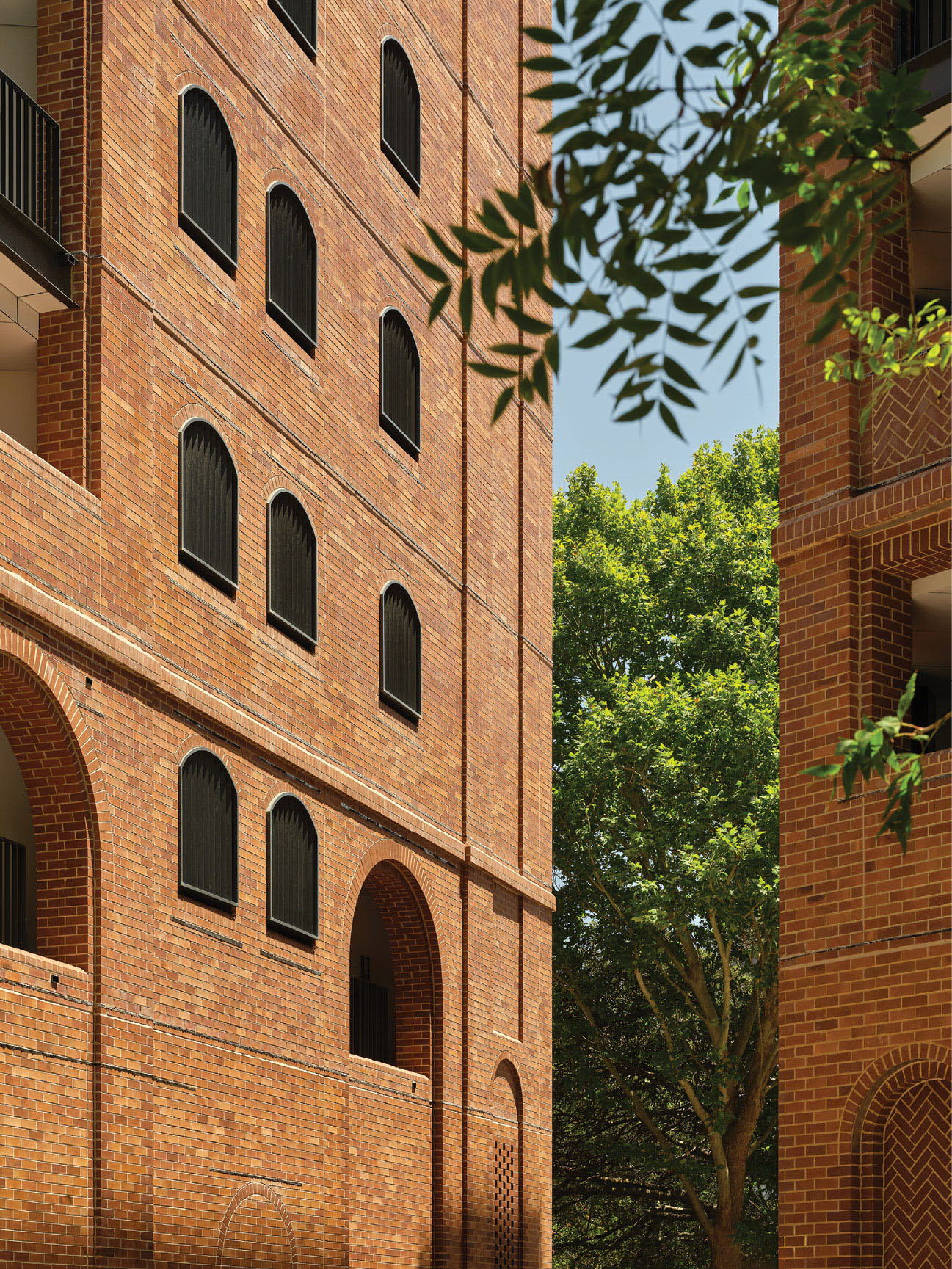
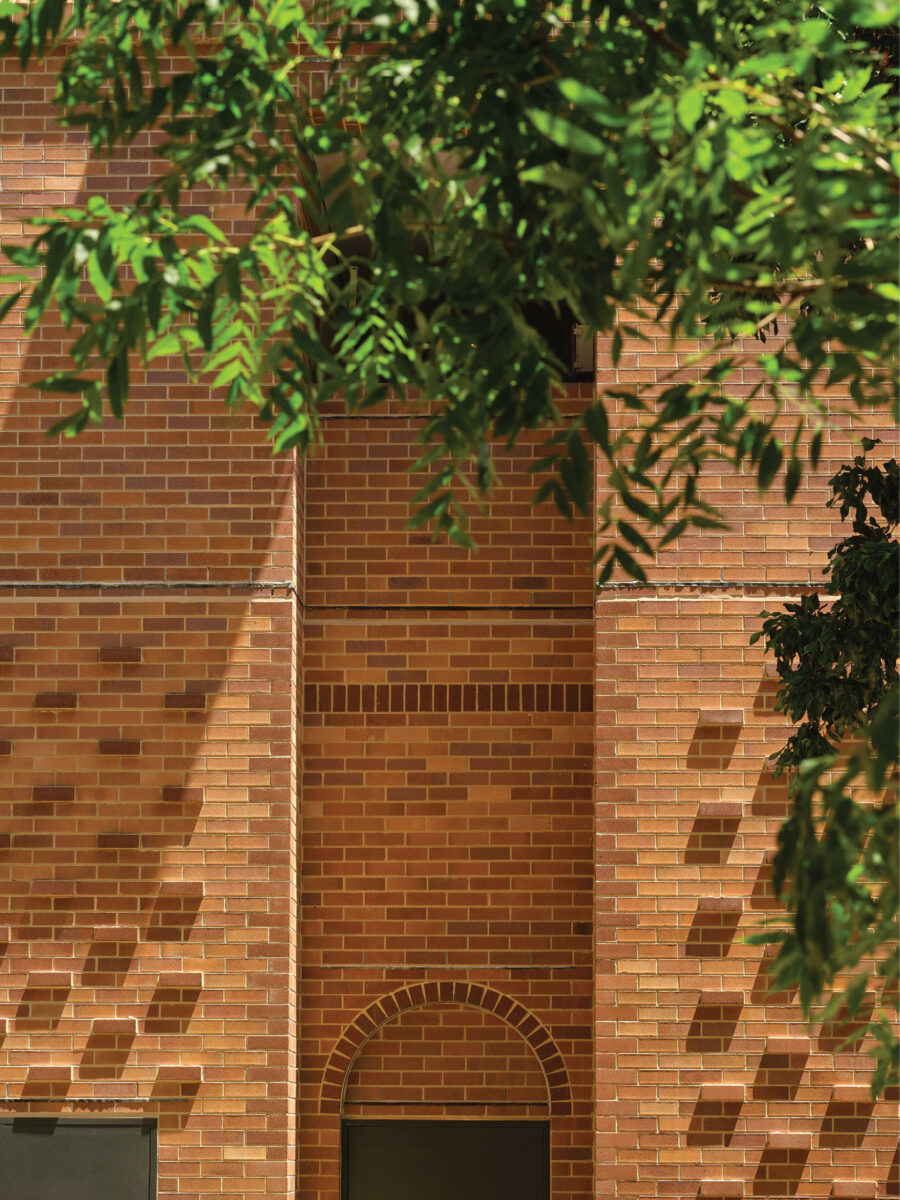
The brickwork showcases traditional detailing and contemporary modulation. Masonry and metalwork create a dynamic composition of arched openings and recesses, providing privacy to balconies and daylight to lift lobbies.
Matthew Gallagher
Homes NSW
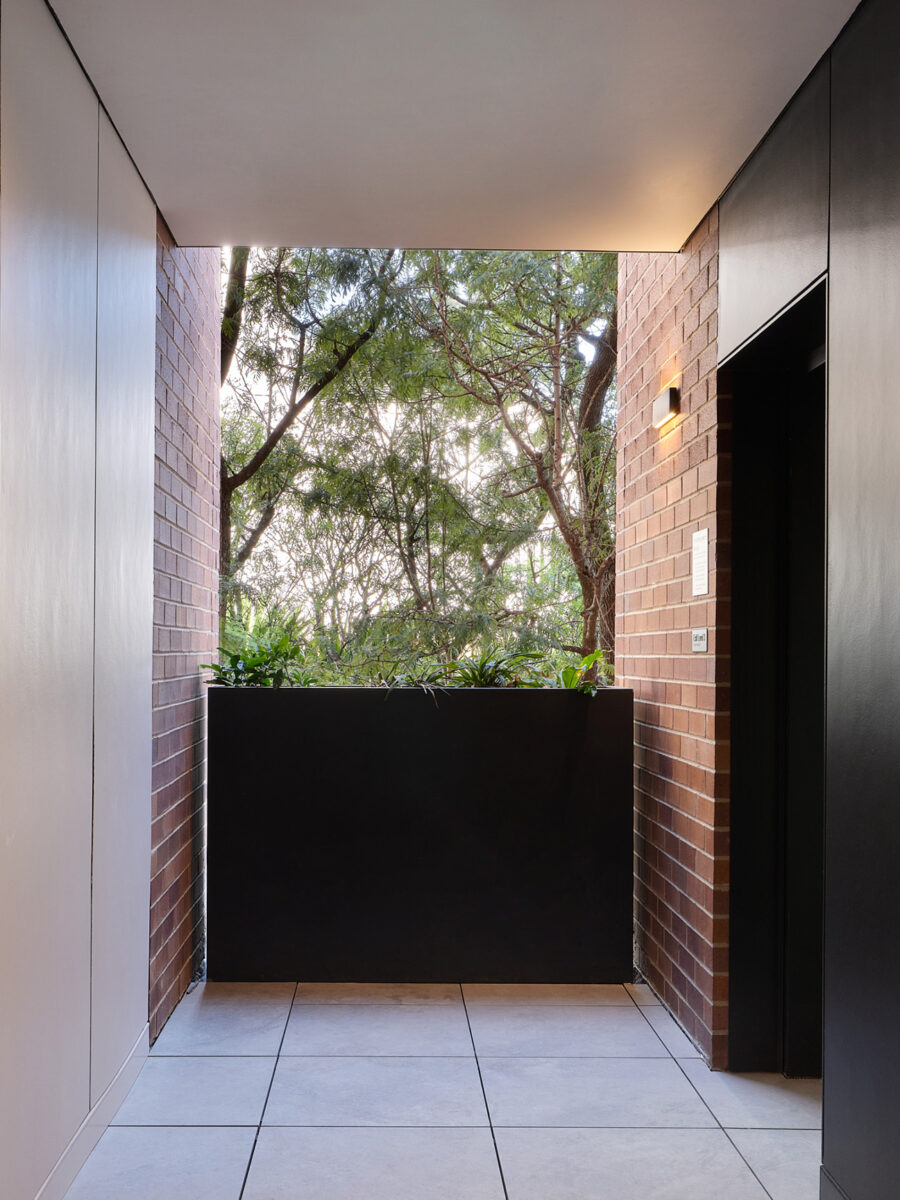
The apartment buildings have naturally ventilated lobbies providing access to the 5 apartments on each floor. Every apartment is well-planned and most have dual outlook.
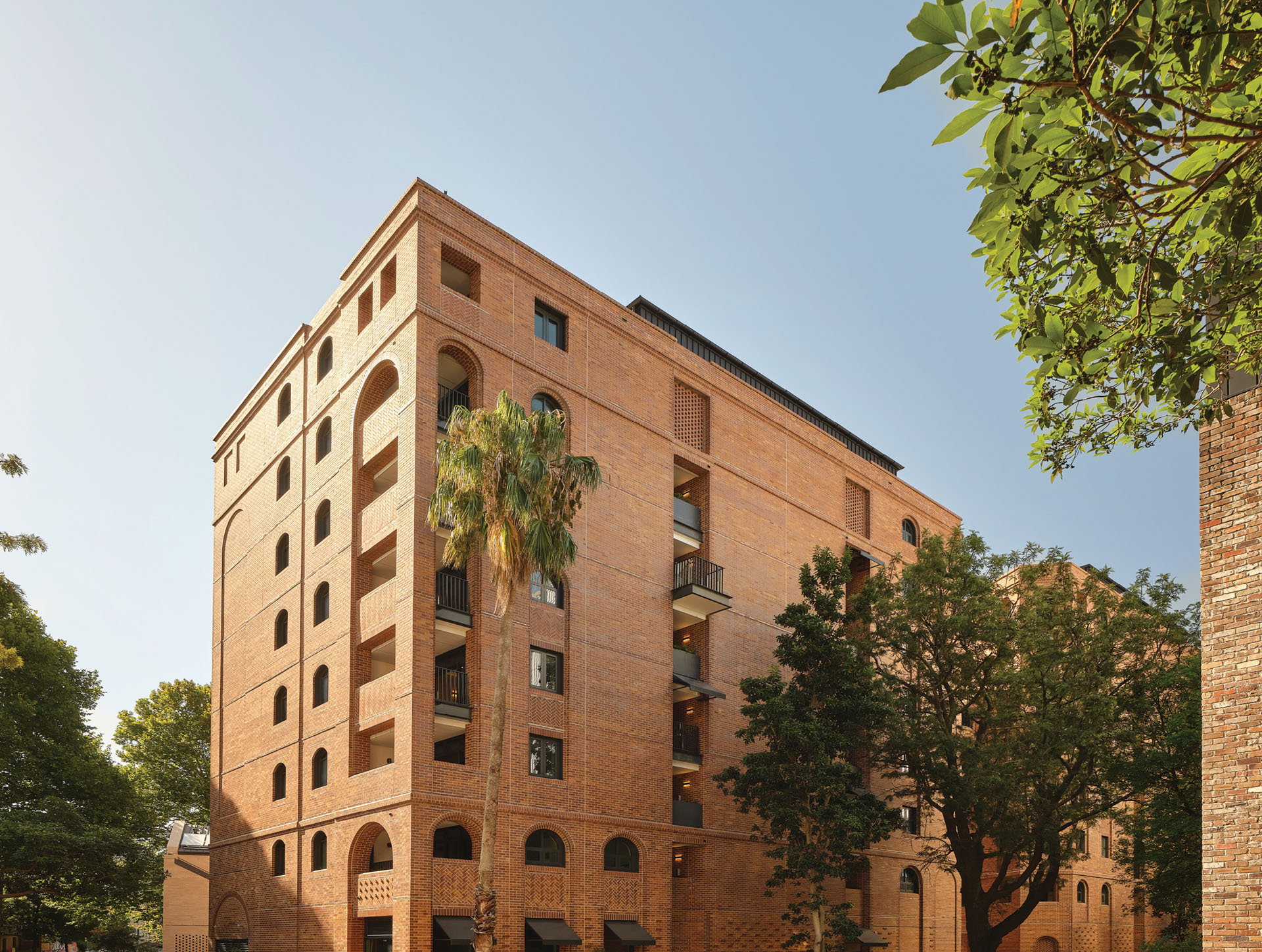
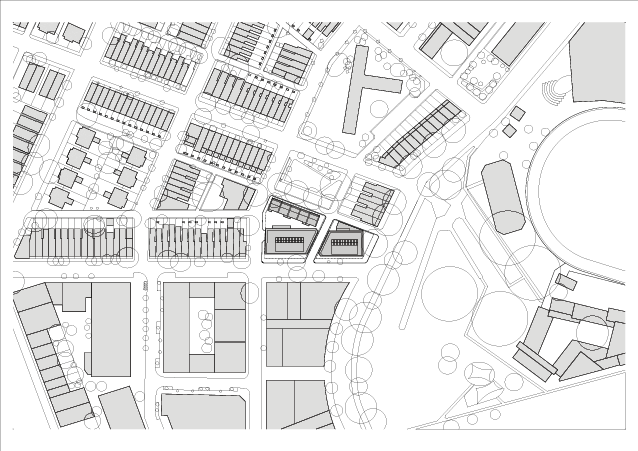
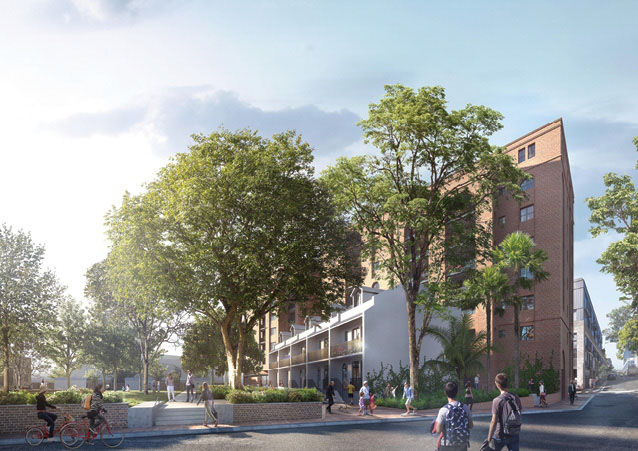
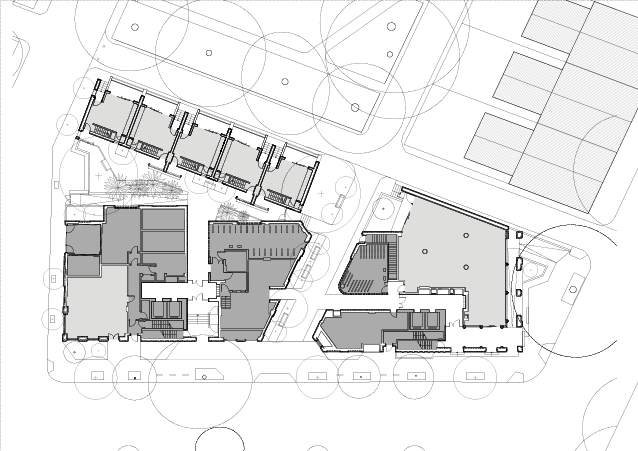
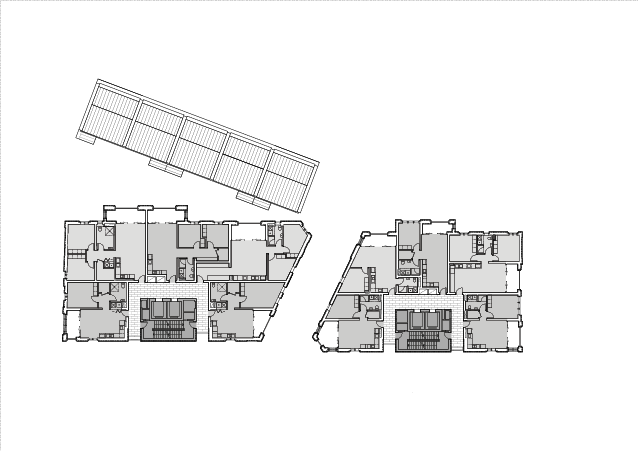
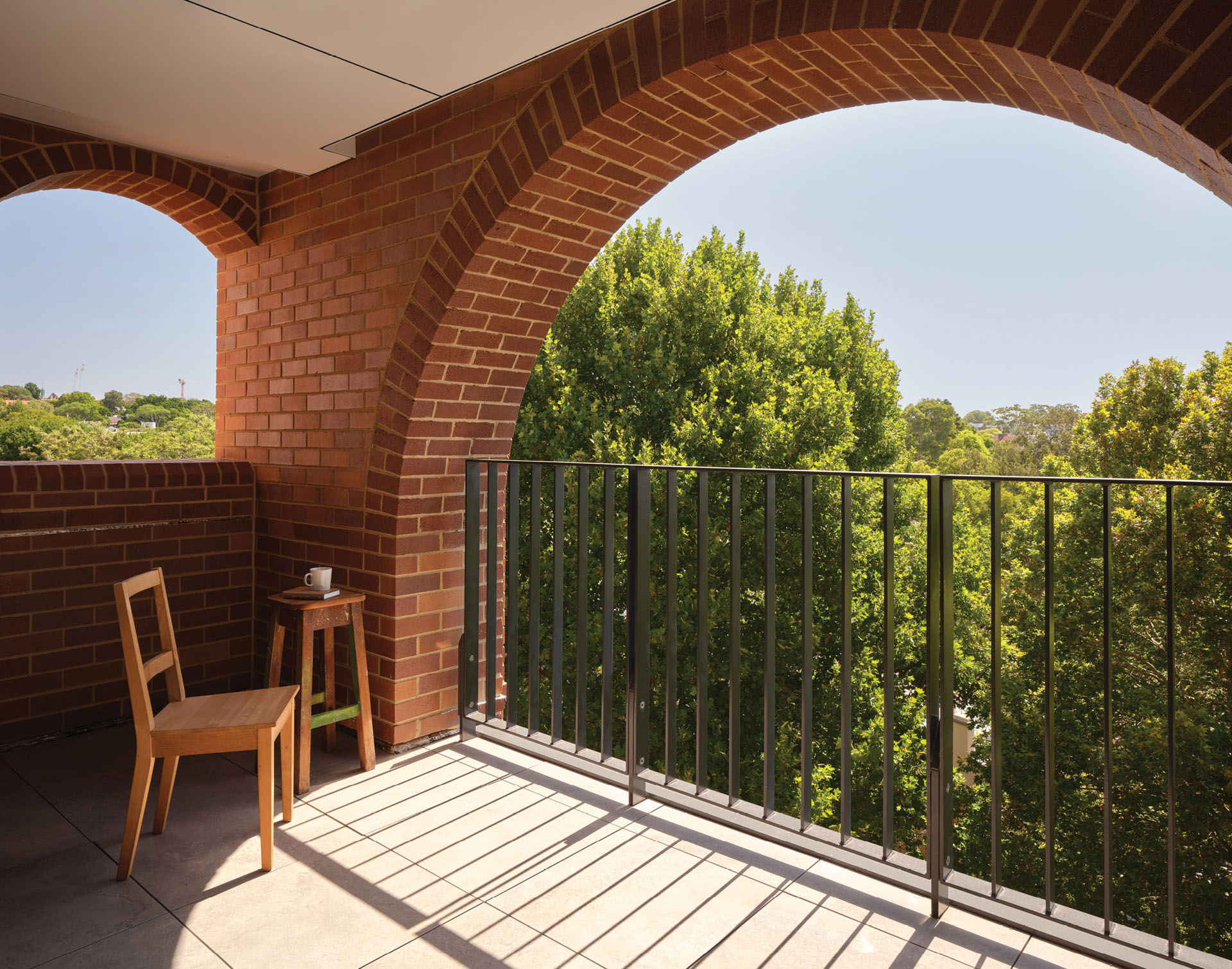
The project delivers 75 dwellings across three buildings. The terraces extend the low-rise enclosure of an existing park to the west and enable solar access for the buildings behind. The 8 level buildings along Cowper Street frame views to Wentworth Park and incorporate setbacks to retain existing street trees.
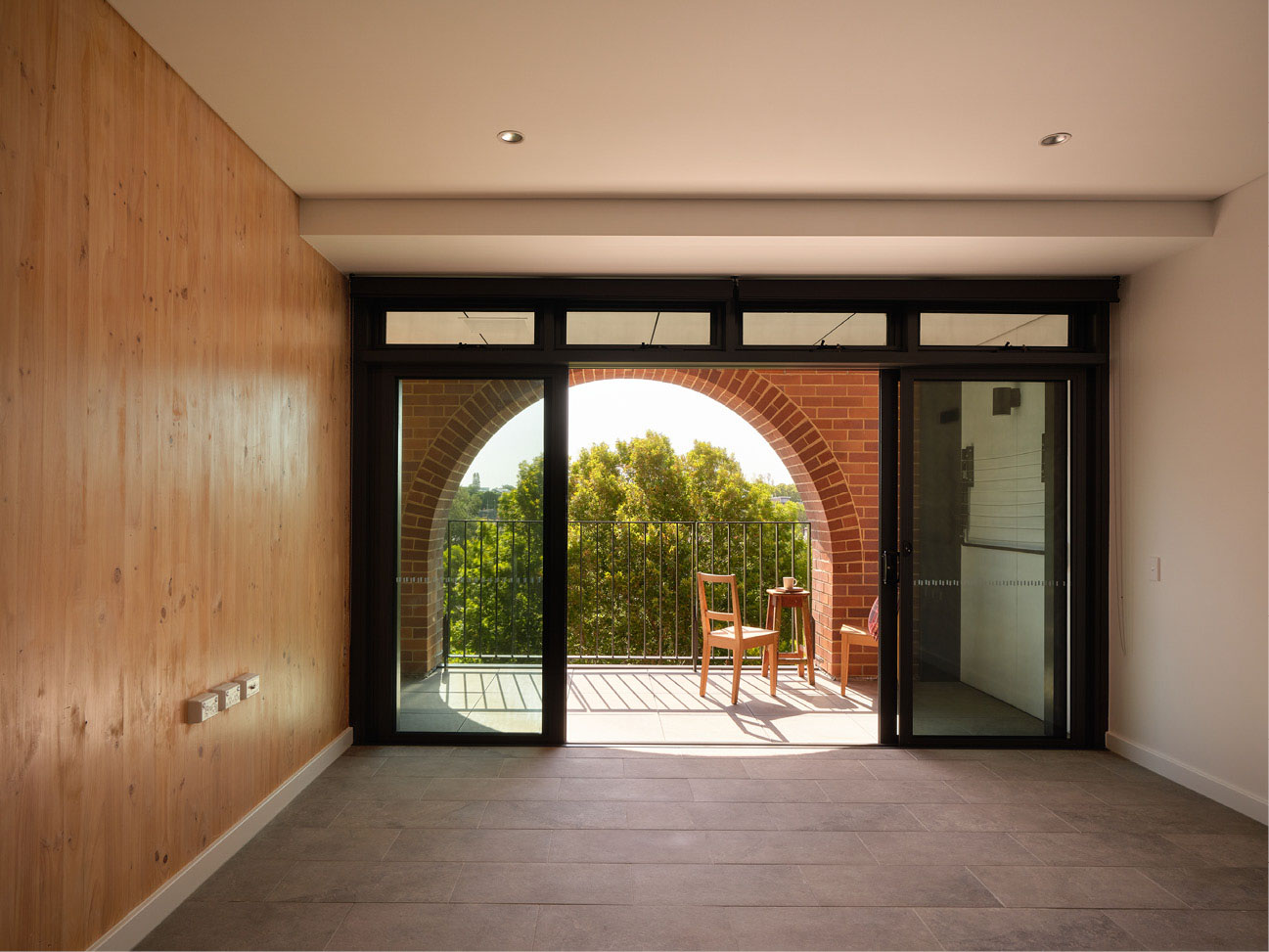
Every apartment is well-planned and most have dual outlook.
Over 80% of the dwellings are naturally ventilated and receive more than 2 hours of sunlight mid-winter. Ceiling fans are provided in lieu of air conditioning. 28% of apartments are adaptable to Livable Housing Australia’s Silver Level.
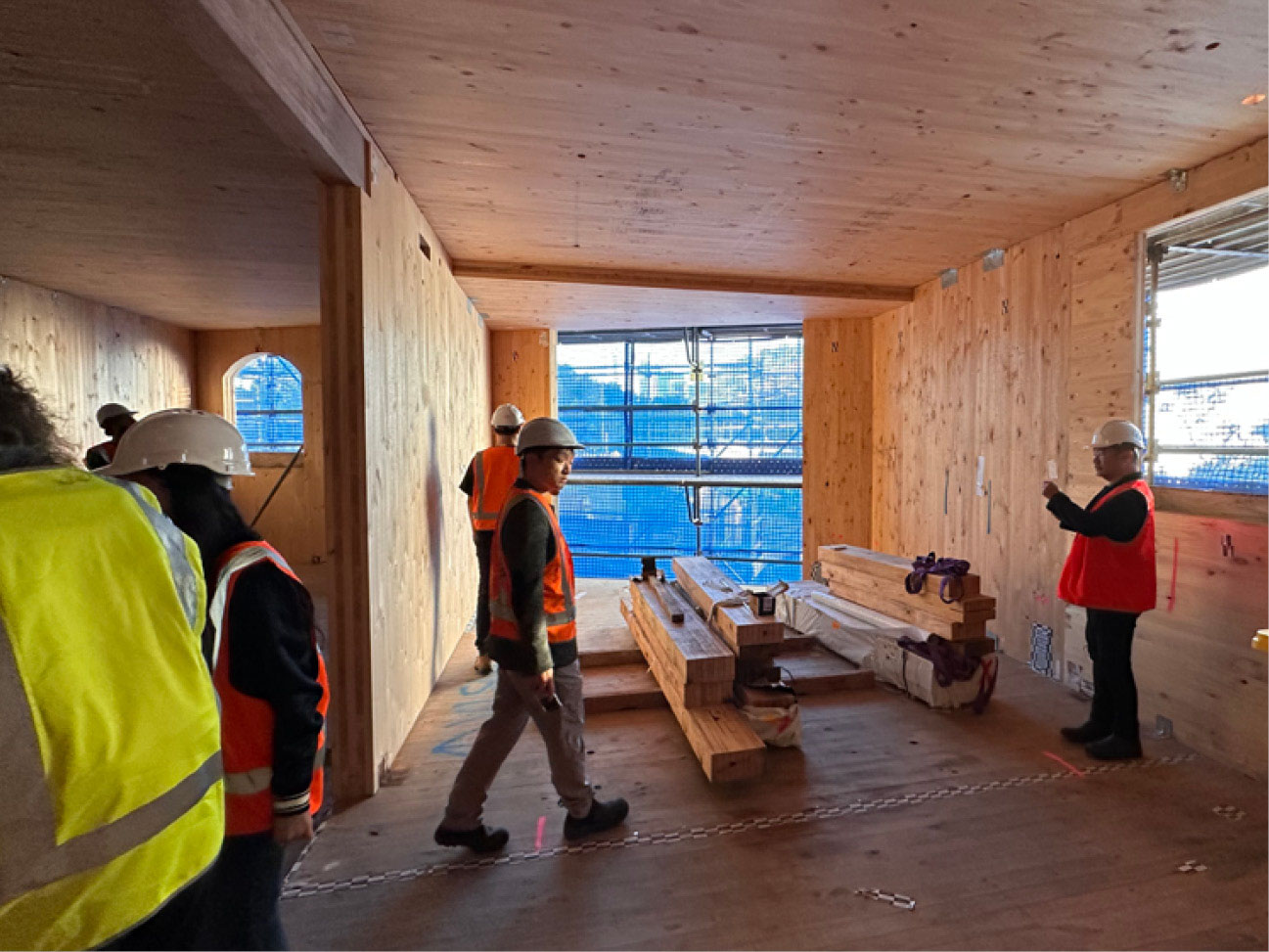
The combination of brick and CLT necessitated innovative solutions for code compliance and constructability. Above ground level, all floors and internal walls other than the lift shaft are CLT with the CLT timber face visible within each apartment.
Brick provides high thermal mass for good internal comfort and passive climate control, and complements CLT by being robust and breathable. The CLT was produced by XLam in Wodonga using NSW State Forest timber.
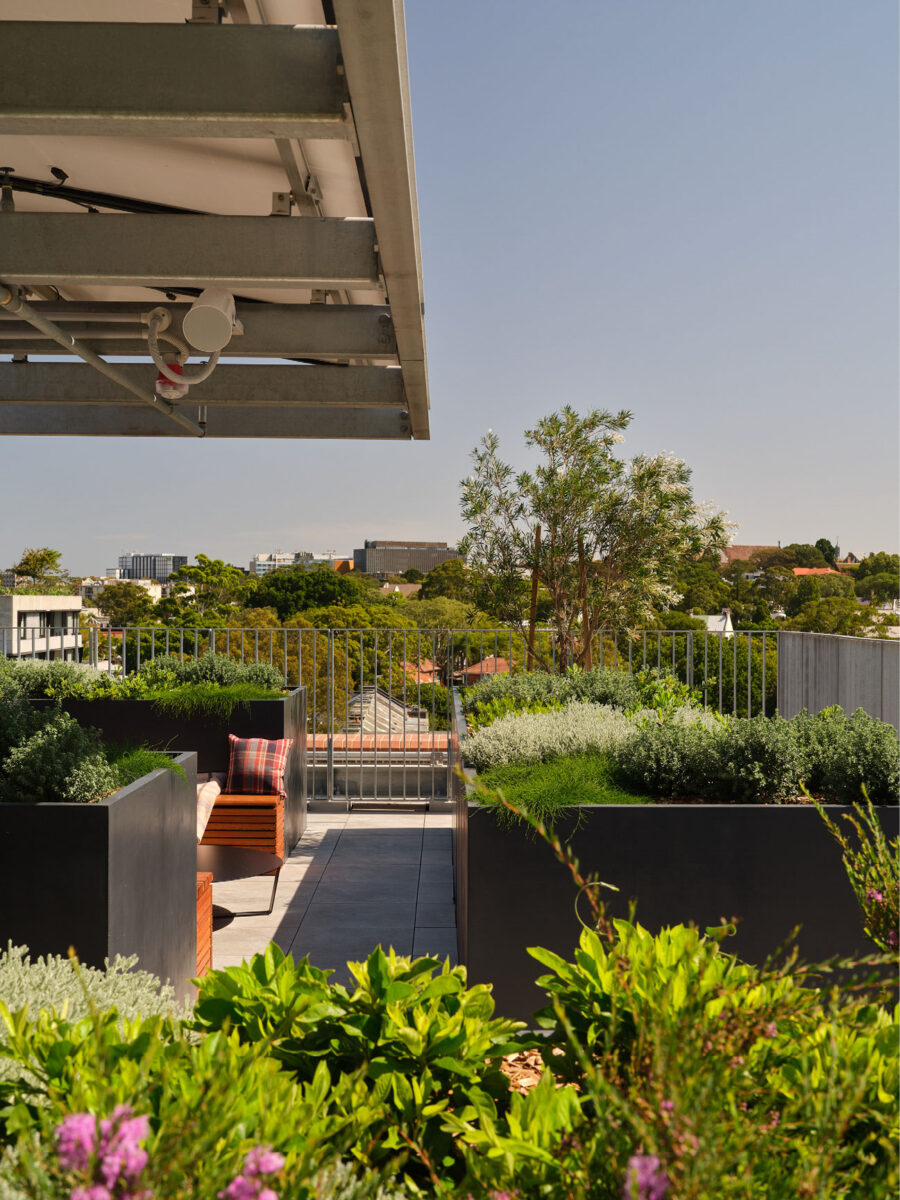
The project showcases a diverse range of sustainable initiatives and passive building design principles to maximise long term flexibility and durability while minimising energy use. The project is fully electric and will be amongst the first 6 star Green Star social housing in Australia.
Communal roof gardens on each building provide secure and safe outdoor spaces, and the site planning delivers 15% deep soil area, more than double the ADG requirement. Existing palms were moved and reinstated into courtyard landscape.
The ongoing housing crisis is particularly challenging for those who rely on social housing. The Cowper Street Housing project illustrates how greater density can be introduced to urban areas, make a positive contribution to local communities, and deliver new homes that exceed market housing performance benchmarks.